
Malcolm Arnold Petition Success!
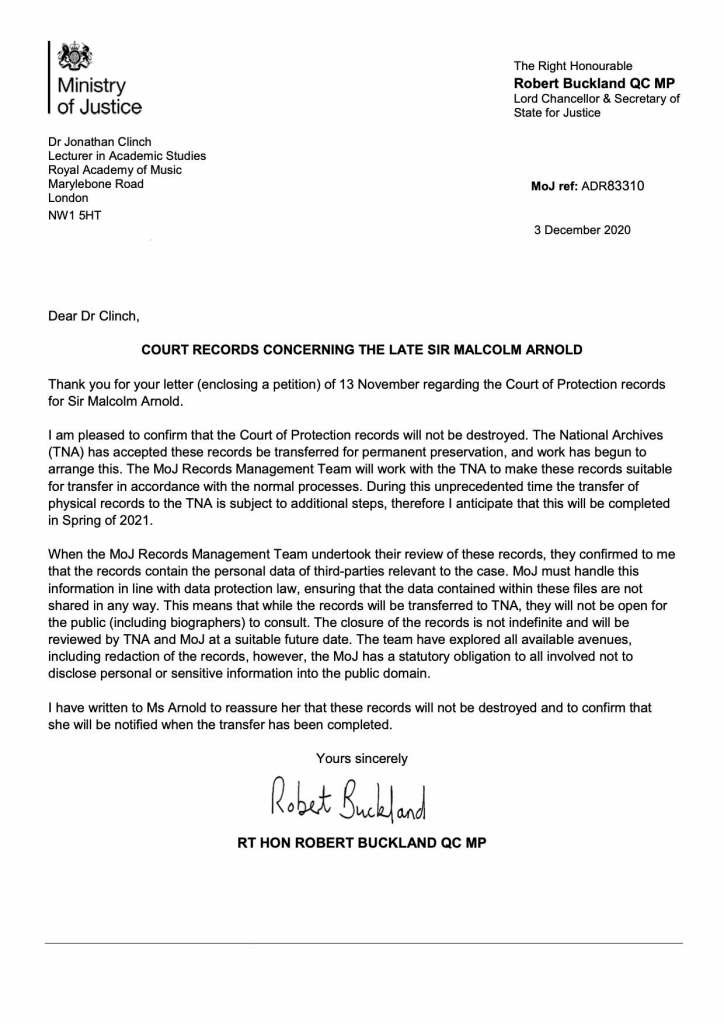
I am delighted to post this response to the Arnold petition. The original story is covered by the BBC here.
Worcester Three Choirs 2020: Zoom Interview with Guy Johnston
The cellist Guy Johnston (Associate Professor of Cello, Eastman School of Music, Rochester) and Jonathan Clinch discuss Herbert Howells’ Cello Concerto, completed by Dr Clinch in 2014 and recorded by Guy Johnston on the label of King’s College, Cambridge. Full details of the project can be found here.
Worcester Three Choirs 2020
Three Choirs Festival in Worcester was due to feature music by Herbert Howells this week. In this brief vlog I discuss two recent projects and how you can hear these works for the first time.
Herbert Howells, Cello Concerto
Guy Johnston, Britten Sinfonia, Christopher Seaman
https://www.kingscollegerecordings.com/product/howells-cello-concerto-english-mass/?v=79cba1185463
Herbert Howells Piano Music, Volume One
Matthew Schellhorn – http://smarturl.it/howellspiano1
HYPERION: Programme Note for Herbert Howells – Missa Sabrinensis
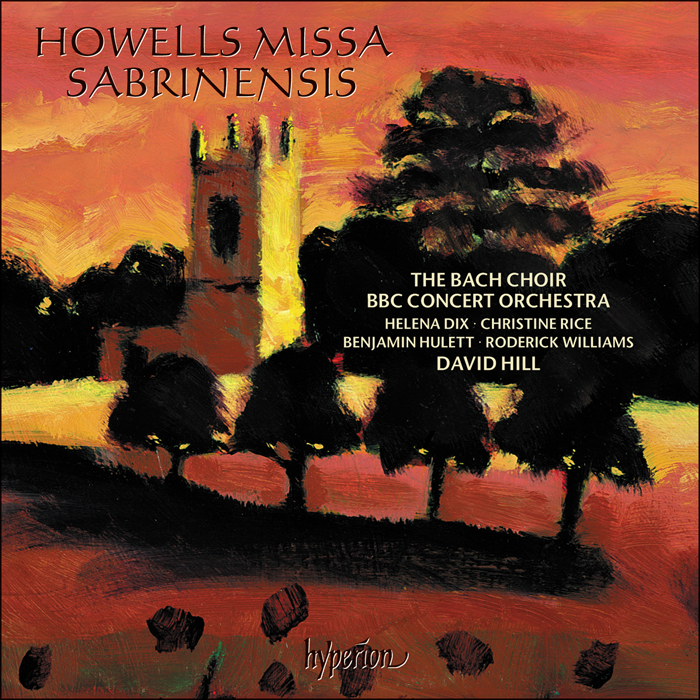
A Choral Symphony in all but name and one Howells’ greatest achievements, the 1954 Mass of the Severn (River) is now available from Hyperion.
My Programme Notes
The English composer Herbert Howells (1892-1983) is chiefly celebrated today for his liturgical choral music within the Anglican cathedral tradition, but that represents a fraction of his overall output. His three large-scale masterpieces for chorus, soloists and orchestra—Hymnus Paradisi (1950), Missa Sabrinensis (1954) and Stabat mater (1965)—take that style and elevate it to a new level. They stand out not only because the composer’s highly distinctive style is instantly recognizable and direct, but because they demonstrate a profound ability to set such universal texts in a very personal way, with an overwhelming intensity of emotional thought. Howells was most inspired when dealing with the substantial musical architecture required in setting what he called ‘immemorial prose’: words that, although they had little personal meaning for the atheistic composer, had nevertheless represented a source of human comfort for centuries. Howells wrote of the Mass that, ‘for the creative musician it has become—like the Passion—one of the two superlative texts for musical setting’. After the significant success of the requiem Hymnus Paradisi, written for his nine-year-old son Michael and performed at the 1950 Three Choirs Festival (thence repeated in 1951 and 1952), Howells was immediately approached by David Willcocks, then-Organist and Choirmaster of Worcester Cathedral, to consider writing another work for the 1954 Worcester Three Choirs Festival. The score of the resulting Missa Sabrinensis was nearly lost when Howells’s bag was stolen and thrown from a train, but it was miraculously retrieved by police. Malcolm Sargent conducted performances in London and Huddersfield following the premiere conducted by Howells himself, but the piece was not revisited until October 1982 when The Bach Choir performed it at the Royal Festival Hall under Willcocks in celebration of Howells’s ninetieth birthday. Willcocks commented that such was the level of intricate detail in Howells’s counterpoint that he was like a medieval stonemason carving high in a cathedral, knowing that his details would be perceptible only to the composer. However, careful editing (by Paul Spicer and David Hill) and advances in recording techniques mean that, in a sense, we now have the chance to hear for the first time Howells’s Mass as he had originally intended, with all of the intricate detail.
The title Missa Sabrinensis, meaning ‘Mass of the Severn’, was a geographical and psychological link between the harbour-town of Lydney (Howells’s birthplace in Gloucestershire), Gloucester (where he received his earliest musical training) and Worcester, where, as Howells put it, the cathedral ‘stands sentinel on the banks of the same noble river’. The Three Choirs Festival had been seminal in his early musical education. His first visits in 1907 and 1910 not only exposed him to a tradition of orchestral music, but allowed him to form personal friendships with some of the leading British composers, including Elgar, Parry and Vaughan Williams. Howells continued to make an annual pilgrimage to Worcester, Gloucester and Hereford throughout his life and it played an important role for a composer who felt such a strong sense of heritage—a heritage that the festival and the cathedral tradition more generally provided, and to which he felt a significant duty.
One of the most significant musical experiences of Howells’s early years was hearing the ‘gravely arched phrases’ of Ralph Vaughan Williams’s Fantasia on a theme by Thomas Tallisat its premiere in Gloucester in 1910. The 1954 festival included not only the premiere of Howells’s Mass, but also of Vaughan Williams’s cantata Hodie, which he dedicated to Howells. Vaughan Williams was one of a small group of close friends (along with Herbert Sumsion and Gerald Finzi) who had persuaded Howells to release the score of Hymnus Paradisi, and from the very beginning of the Missa Sabrinensis the listener will be aware that there are some very notable moments of homage to the other composers. Where Howells breaks away significantly from the English tradition is in the complexity of his counterpoint. In many ways the Mass can be heard as more of a choral symphony, in which he gradually builds up significant blocks of sound, using the soloists, chorus and orchestra as contrapuntal forces. This is the main reason that the work was considered so difficult, as the orchestra was not there to support the chorus in the traditional manner, but rather to build more and more lines of polyphony. The river metaphor is appropriate as Howells writes such long lines, which are subsumed into the overall mass of sound, surging forward through the first four movements and gradually dispersing in the final two; thus, despite the complexity and number of Howells’s parts, it is the overall symphonic arch that dominates.
In a letter to Walter Emery, Howells described his overall vision:
Each [movement] builds itself in obedience not only to the text but to the logical sequence of purely musical ideas. In each movement the composer seems to have sought a dominant mood and to [have] allowed such mood to stamp itself intensively upon thought and expression. Episodic phases serve to interrupt the mood, but only to a point necessary to the easing of tension. In broader terms, in the work as a whole, tension mounts throughout the first three movements and is maintained to the end of the ‘Sanctus’. From the climax at ‘Osanna’ there begins a lengthy, graded reduction of power extending into and throughout the ‘Benedictus’. ‘Agnus Dei’ looks back over the whole work. In its nature and function it is retrospective. Themes and mood link it closely with the ‘Kyrie’. The music of the sixth movement, though so largely identified with the first, is remoulded to permit gradual elimination of complexity and a final issue in the tranquility of ‘Dona nobis pacem’.
Howells’s first movement introduces a sound-world that fuses the French pastoral of Debussy and Ravel with a more English diatonic sound, more redolent of Vaughan Williams (particularly his own Kyrie from the Mass in G minor) and Parry. Early sketches suggest that the Kyrie may have formed part of Hymnus in an early draft, and the music treads a similar fine line between anguish and ecstasy. Overall there is a constant sense of searching, as though the composer wanted to believe, but ultimately (as we shall hear in the ending of the Mass) could not. The long smooth lines with their complex melismata seem to look back to Howells’s early Mass in the Dorian mode and his experience of hearing chant at Westminster Cathedral. Howells wrote thus:
This movement is almost uninterruptedly choral, passionate (rather than contemplative) in a degree that will mark so much of the work. It serves to bring into line all three main agents of the setting, assembling these in a close union of themes and texture. In the first ‘Kyrie’, Soprano and Tenor ‘soloists’ act in extension of the chorus. The Baritone is for a while almost identified with the choral basses. In ‘Christe eleison’, Tenor and Soprano are more nearly soloist, sharing the climax. In the return of ‘Kyrie eleison’, the Contralto sings briefly in the quietude of the coda.
Initially the ecstatic fanfares and constant dotted rhythms of the ensuing Gloria invigorate Howells’s long lines with the small energetic fragments that we associate with Walton and Holst, creating a texture teeming with life, reinforced with bright high brass and percussion. Despite this constant activity on the surface of the water, Howells’s music moves relatively slowly, and the building-up of so many competing parts betrays an overwhelming and very modern effect as the words become incomprehensible in the overall volume of sound. Howells wrote of the Gloria:
This movement easily admits the soloists as associates in the general flow of counterpoint. Later, in ‘Qui tollis’, first the Contralto then the Tenor and Soprano give leadership to the semi-chorus and (in ‘Qui sedes’) to the full choir. Their mission includes the summoning of all forces to recapitulation (‘Tu solus sanctus, tu solus Dominus’). The ‘Cum Sancto Spiritu’ becomes a fugal texture growing in movement and size up to the high-lying ‘in gloria Dei Patris’.
The great statement of faith, Howells’s Credo is the heart of the Missa Sabrinensis. The power and confidence of the unison theme at the opening, and its frequent return, are set in tension against a backdrop of dissonance and bitonality. Again this gives an overall impression of hope, but against significant strife. Howells writes:
Marked ‘Maestoso, ma con moto’, this movement is begun in full cry, chorally and orchestrally, using a theme that will return at all cardinal moments (‘Deum de Deo’, ‘cuius regni’, ‘Qui cum Patre et Filio’, ‘Confiteor’, ‘Et vitam venturi’ and the ‘et exspecto’). At ‘in Spiritum Sanctum’ the theme of ‘Qui sedes’ and that of ‘Kyrie’ and ‘Agnus Dei’ are quoted. Thereafter the movement’s climax is reached through the style of opposed diatonic chords (‘et apostolicam Ecclesiam’), recapitulation (‘Confiteor’) and coda (‘Et vitam venturi saeculi’).
Howells’s Sanctus begins with a solemn procession, emphasizing its ritual nature with echoes of the finale of Stravinsky’s Symphony of Psalms, a work that he frequently referenced in his own teaching.
A brief, sombre, slow-moving orchestral prelude over an ostinato-like bass precedes and leads to the choral return. When the soloists are heard again, their text is the ‘Pleni sunt’; the chorus’s, ‘Sanctus Dominus Deus Sabaoth’. There is no separation between ‘Sanctus’ and ‘Osanna’. ‘Osanna in excelsis’ is used for the gradual simplification and tranquilizing of the ‘Sanctus’ as a whole.
The delicate Benedictus contrasts all that has gone before, and its use of solo voices and significantly reduced orchestral forces echoes Vaughan Williams’s Mass in G minor, giving the movement a transcendent quality.
This, almost wholly quiet music (‘Piacevole, con tenerezza e felicita’), is for the four soloists, semi-chorus of women, and small orchestra. A flute becomes a fifth solo ‘voice’ in the earlier phase, and again at the end. There is no return to music of ‘Osanna’. Here ‘Osanna’ and ‘Benedictus’ are inseparable in music that makes the movement self-contained.
Howells writes of the final movement, the Agnus Dei:
This, on the contrary, bears witness and relationship to the ‘Kyrie’ in a large way as well as returning to the Benedictus theme in the ‘dona nobis pacem’. The injunction ‘Lento appassionato’ indicates (and in great measure governs) the nature of the music. But the last phase is of a constantly diminishing intensity.
The return of the opening music in Howells’s final movement reinforces the symphonic nature of the work, giving the listener such a strong sense of returning home. The nostalgia of this retrospective could be linked to the composer’s personal sense of ‘home’ in the area, but it is also tinged with sadness. The countryside of his childhood around the Severn was now also associated with the loss of his son on a family holiday, and of Michael’s subsequent burial at Twigworth, outside Gloucester—quite the opposite of the English pastoral idyll. For Howells, as in Hymnus Paradisi, the Missa Sabrinensis was about the memorializing of a lost son (personalizing the work’s biblical origins), and that he was able to combine these elements within such a grand symphonic plan makes it one of his greatest achievements.
from notes by Jonathan Clinch © 2020
NAXOS Howells Piano Music Volume 1
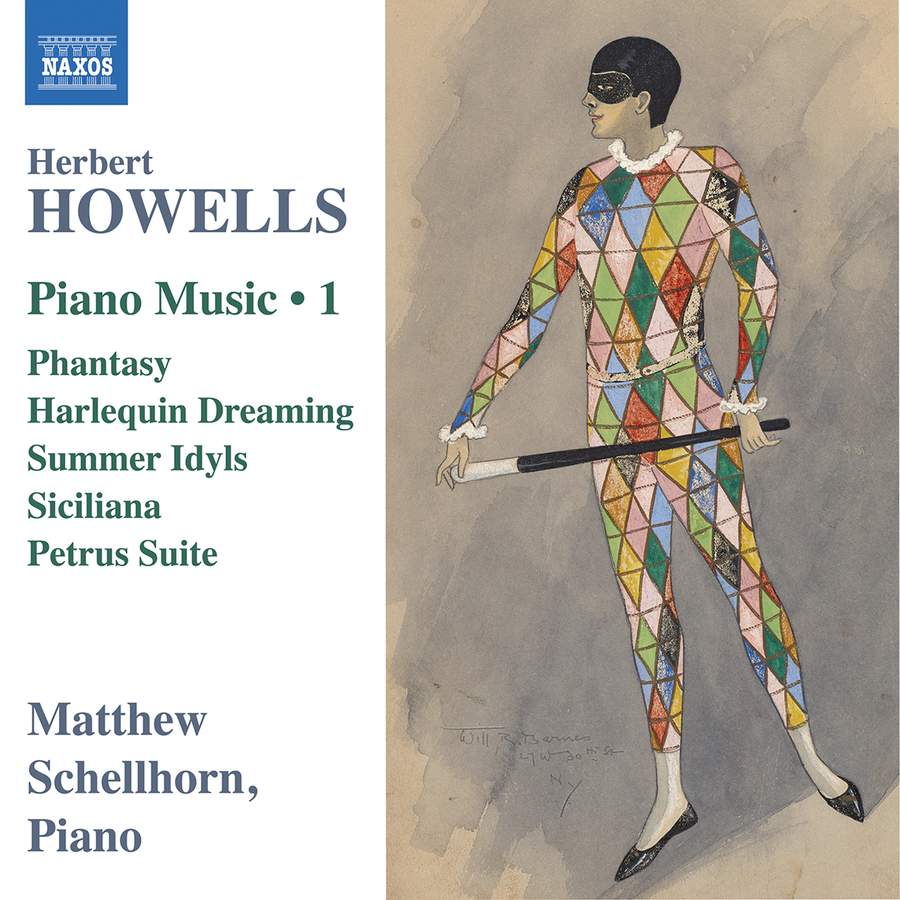
Out Now!
This new CD is entirely made up of piano pieces that I have found on my research travels, beautifully played by Matthew Schellhorn. My edited scores will be published in a volume by Wise Music, the release of which has been delayed due to the pandemic.
Listen HERE.
Here are my notes for the new release. Enjoy!
Naxos – Howells Piano Music Volume One
Born in 1892, Herbert Howells’ earliest musical education came from his sister at an old upright piano within the family home at Lydney, Gloucestershire. His school headmaster encouraged him, and a local squire funded more serious musical tuition with Herbert Brewer at Gloucester Cathedral, becoming an official apprentice at the same time as Ivor Gurney and Ivor Novello. Crucially, the link with Gloucester also drew Howells into the world of the annual Three Choirs Festivals, where he experienced not only the riches of the oratorio tradition but also some of the latest contemporary music. When he won an open scholarship to study at the Royal College of Music in 1912, he changed overnight. The ‘queer-looking scrubby little creature’ (that Hubert Parry describes in his diary) transformed himself into a charming, dapper gentleman. With the move to London, Howells jettisoned so much of his early musical style in favour of a far more refined approach where every note mattered. The move to such a cosmopolitan city allowed Howells to soak up all the latest music. Parry mentored him and he was frequently invited to salon recitals in the homes of the rich and famous in Kensington and beyond. The Royal College of Music itself hosted many of the earliest London performances of new music and it was the French school of Debussy and Ravel that had the greatest impact on Howells. Likewise, the wartime performances of Sergei Diaghilev’s Ballets Russes were unmissable for the young composer. He joined the teaching staff of the Royal College of Music in 1920, remaining there throughout his career until ill health forced him to reduce his musical activities in the late 1970s. He died in 1983.
As for many composers, the piano was the instrument at which Howells liked to experiment and although he never composed directly at the instrument (Charles Stanford had taught him that this approach encouraged poor technique) it was nevertheless, an important tool for him. It also played an important role in his creative imagination and he claimed that he could never write without a person or a place in mind. His most personal gifts were very often piano pieces and I am very grateful to all those who released manuscripts for this project, so that they could be recorded and published for the first time.
The 1910 Three Choirs Festival had a strong impact on the young Howells, particularly the premiere of Vaughan Williams’ Fantasia on a Theme by Thomas Tallis, and it was then that he committed to following a professional career as a composer. His lessons with Herbert Brewer had provided a strong training in both piano performance and composition. His friendship with Ivor Gurney was also hugely influential. Gurney departed for the Royal College of Music that year but continued to return home to Gloucestershire regularly and the pair frequently walked for days in the surrounding countryside. The Summer Idyls were written between April and May 1911, and they formed part of a portfolio which he submitted to the Royal College of Music for his open scholarship. In spirit, they seem to capture the pastoral wanderings of Gurney and Howells. In style, they allude to a range of musical influences. The general theme is of the Romantic character piece or miniature (and there are moments of Schumann or Grieg, for example) but the changing musical landscape is also represented, from the jaunty Elgarian tunefulness of Meadow-Rest (‘Not too slowly, but very quietly’), Summer-Song (‘Very lively and gay’), and In the Morning (‘Cheerily’), through to the Debussy-like dreaming sonorities of June-Haze (‘Very peacefully and persistent’) Quiet Woods (‘Tranquil, and not too slowly’), and Near Midnight (‘Slowly but not in strict time’). Elsewhere (and particularly in Down the Hills) Howells marks his deep love of Rachmaninoff’s latest piano writing.
Contemporary French music continued to be a strong influence on Howells throughout his time as a student (1912–17). In Phantasy (1917) we hear possibly the most successful Ravel-pastiche by an English composer, with Jeux d’eau echoing throughout the playful scherzo. Nevertheless, the level of compositional craft marked out Howells’ original voice, with several commentators pointing to him as ‘the hope’ for the next generation of British music. At the heart of Harlequin Dreaming (1918) is a fantastical waltz that develops through hypnotic repetition, only to vanish to nothing at the end. It is most likely that the puckish character that the composer had in mind was his close friend, Arthur Bliss.
The photographer Herbert Lambert had a sideline in making clavichords and in the summer of 1926 he lent one such instrument to Howells, who was fascinated by the exoticness of this relatively unknown instrument with its intimate sound, limited range and highly expressive touch. It connected him to what he saw as the golden age of English music (with composers such as Tallis and Byrd) and sparked a lifelong enthrallment with the dance forms and modal harmonic style of the period (leading to collections such as Lambert’s Clavichord (1927) and Howells’ Clavichord (1961), as well as many other miscellaneous pieces). Although inspired initially by the clavichord, the composer always chose to play the works on the piano. All the remaining piano works here fall into the category of this ‘clavichord style’, fusing renaissance elements with a thoroughly twentieth-century approach to dissonance and expression on the piano. My Lord Harewood’s Galliard (1949) was a wedding present for the Earl of Harewood and his first wife, Marion Stein (later Mrs Jeremy Thorpe), who had been a pupil of Howells. It was originally preceded by a pavane which is now lost.
Gerald Finzi and Herbert Howells had a very complex and, at times, close relationship. On hearing of Finzi’s death, Howells wrote a piece in his clavichord style called Finzi’s rest: for Gerald on the morrow of 27th September 1956 which was later published as part of Howells’ Clavichord. However, this was not the only piece penned that day. Whereas the published tribute emulated Finzi’s own style, the other piece that Howells wrote that day, Finzi: his rest, was much darker, more personal, and far more emotionally troubled. It presents in music a completely different picture of the Howells/Finzi relationship and, for those who understand something of the biography, it is a truly astonishing memorial.
The Siciliana, Pavane and Galliard, and Petrus Suite were all written for pianists at the Royal College of Music. The rich and lilting, Siciliana (1958), with its characteristic dotted rhythm, was completed in an afternoon and gently builds to an impassioned climax, after which the tension is gently dispersed. By contrast, the Pavane and Galliard is a much darker response to the renaissance idiom: written in 1964 at a point when he was also working on his Stabat Mater, it is characterised by the torturous harmonic language of the Pavane (intensified by the dance form) and nervous anxiety of the Galliard. The Petrus Suite was written between 1967 and 1973 for Hilary Macnamara, the title referring to her son, Peter. The Suite underwent a number of revisions and although seven movements exist, it was performed in a number of different orders. In common with other works in his late style, the suite shows a further paring back of his writing, to the absolute essentials of Howells’ counterpoint. Material from the playful Toccatina was also used by Howells in his Sonatina for piano (1971), but the piece originates from a sketch he made on Easter Sunday 1921.
Copyright, Jonathan Clinch 2020
Frank Bridge: Poems of Re-enchantment
Out Now!
The essay ‘Frank Bridge: Poems of Re-enchantment’ on the tone poems of Frank Bridge (including Isabella, Mid of the Night, Two Poems of Richard Jeffries and Summer) has now been published in this new volume from Boydell & Brewer.
The Symphonic Poem in Britain, 1850-1950
Edited by Michael Allis, Paul Watt
Discount online using the code BB135 for 35% discount
(valid until 31 December 2020)
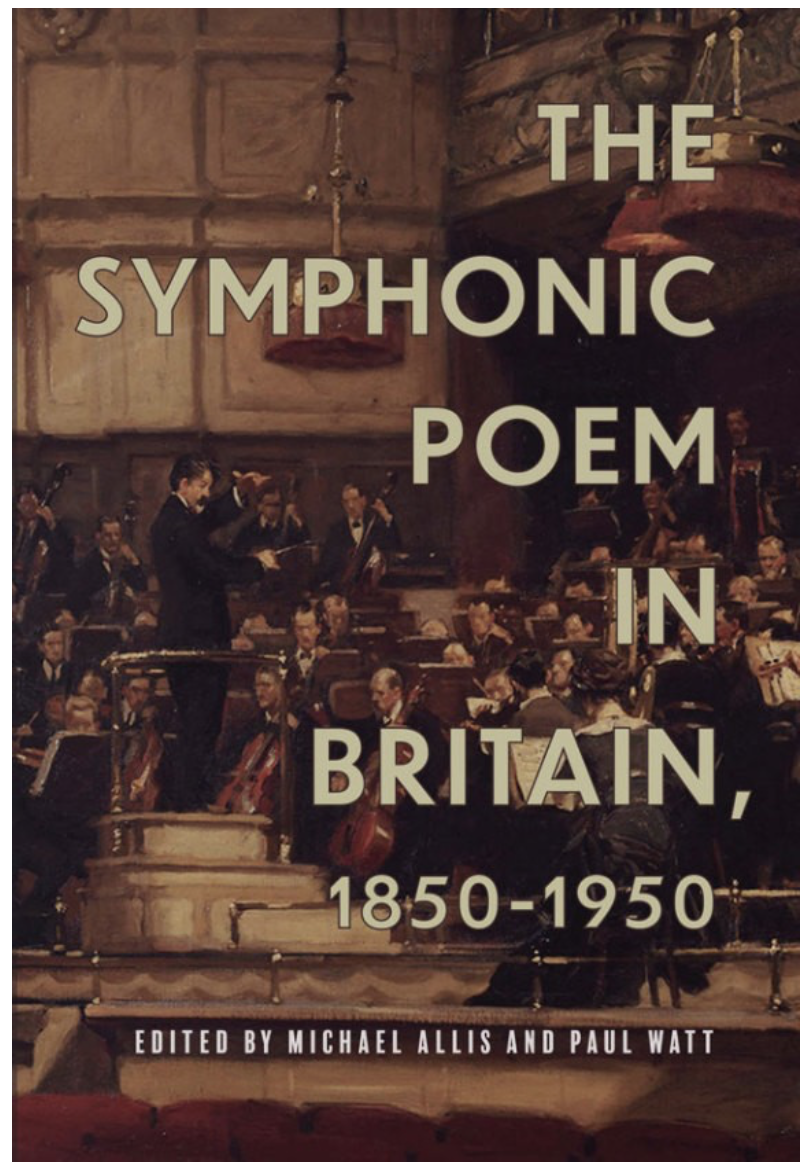
The Symphonic Poem in Britain 1850-1950 aims to raise the status of the genre generally and in Britain specifically. The volume reaffirms British composers’ confidence in dealing with literary texts and takes advantage of the contributors’ interdisciplinary expertise by situating discussions of the tone poem in Britain in a variety of historical, analytical and cultural contexts.
This book highlights some of the continental models that influenced British composers, and identifies a range of issues related to perceptions of the genre. Richard Strauss became an important figure in Britain during this time, not only in terms of the clear impact of his tone poems, but the debates over their value and even their ethics. A focus on French orchestral music in Britain represents a welcome addition to scholarly debate, and links to issues in several other chapters.
The historical development of the genre, the impact of compositional models, issues highlighted in critical reception as well as programming strategies all contribute to a richer understanding of the symphonic poem in Britain. Works by British composers discussed in more detail include William Wallace’s Villon (1909), Gustav Holst’s Beni Mora (1909-10), Hubert Parry’s From Death to Life (1914), John Ireland’s Mai-Dun (1921), and Frank Bridge’s orchestral ‘poems’ (1903-15).
RAM Lecture Recital – Herbert Howells Piano Music
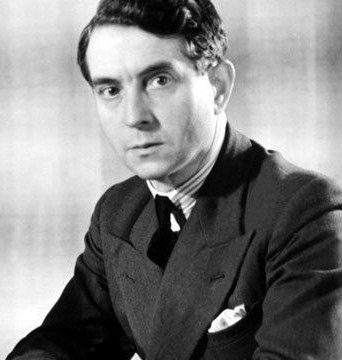
Unheard English Piano Music
Academy lecturer Jonathan Clinch discusses his recent work tracking down 28 unknown piano manuscripts by celebrated composer Herbert Howells (1892-1983). Presented with pianist Matthew Schellhorn, this lecturerecital includes a number of premieres and puts the works in the context of contemporary British music.
Free, no tickets required
New Year Recital – Aberdeen
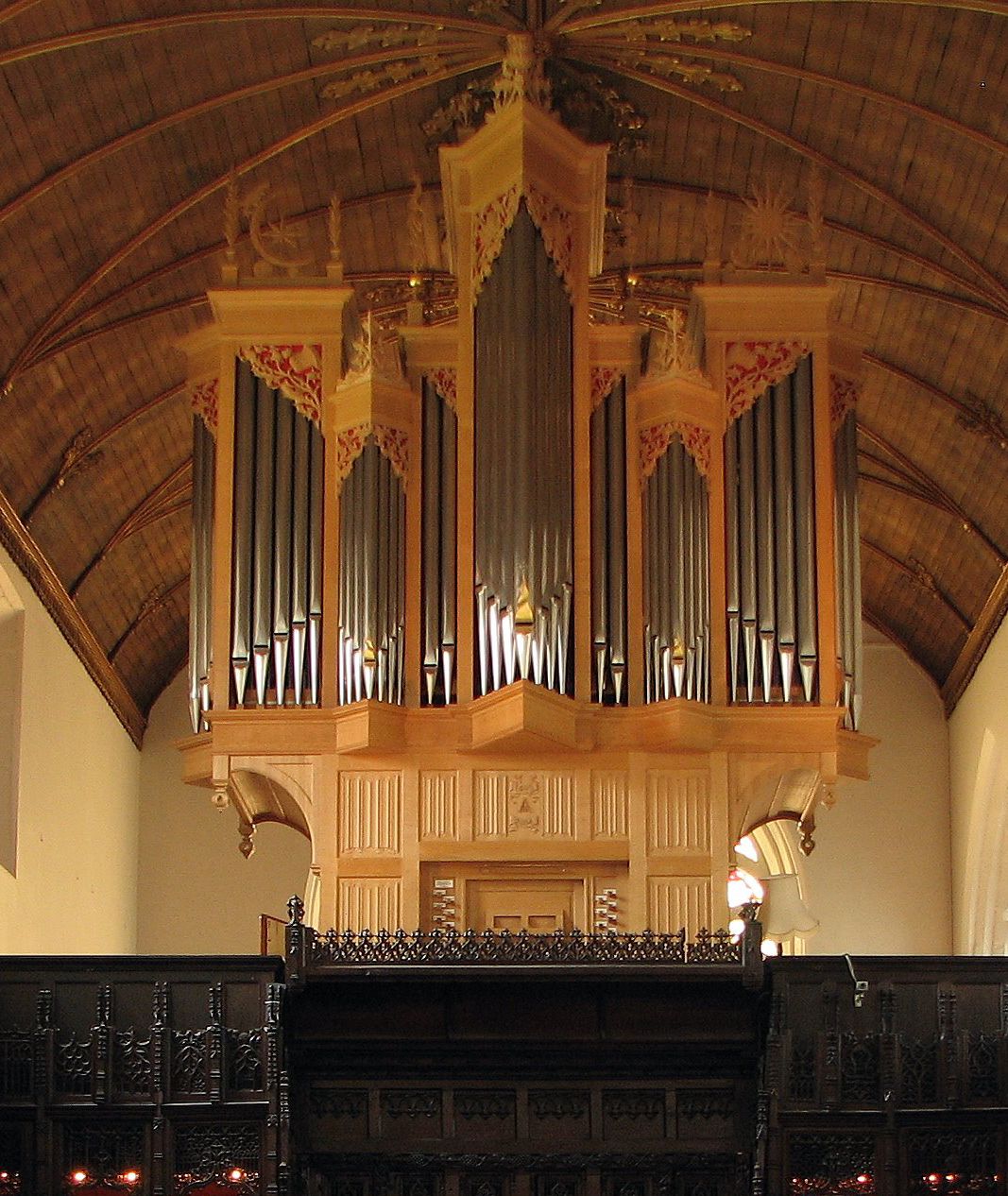
King’s College Chapel
The University of Aberdeen
2004 Aubertin Organ
Monday 20th January – 7:30pm
‘The Tree of Peace’
Contemporary British Music for Organ
Full Programme
White Note Paraphrase (1994)
James MacMillan (b.1959)
Exsultet (2014)
Phillip A. Cooke (b.1980)
The Tree of Peace (2016)
Judith Weir (b.1954)
Epitaph (2014)
Phillip A. Cooke
Chorale Prelude Nunn bitten wir den Heiligen Geist (2019)
Ruth Byrchmore (b.1966) – part of The Orgelbüchlein Project
Chorale Prelude Wo Gott zum Haus nicht gibt sein Gunst (2014)
Robert Saxton (b.1953) – part of The Orgelbüchlein Project
Chorale Prelude in memory of Oliver Knussen (2019)
Robert Saxton
WORLD PREMIERE – Hymn Tune Prelude on Rhosymedre
Phillip A. Cooke
Passacaglia on the name John McCabe (2015)
Robert Saxton
WORLD PREMIERE – Berceuse for a baby, on the notes EzrA ClincH
Robert Saxton
Passacaglia & Fugue in C minor, BWV 582
Johann Sebastian Bach (1685-1750)
Composers
Robert Saxton was born in London in 1953 and started composing at the age of six. Guidance in early years from Benjamin Britten and lessons with Elisabeth Lutyens was followed by periods of study at both Cambridge (undergraduate) and Oxford (postgraduate) Universities with Robin Holloway and Robert Sherlaw Johnson respectively, and also with Luciano Berio. He won the Gaudeamus International Composers Prize in Holland at the age of twenty one. In 1986 he was awarded the Fulbright Arts Fellowship to the USA, where he was in residence at Princeton. He became a DMus (Oxon) in 1992 and was elected an Hon Fellow of St Catharine’s College, Cambridge in 2015.
He has written works for the BBC (TV, Proms and Radio), LSO, LPO, ECO, London Sinfonietta, Nash Ensemble, Northern Sinfonia and David Blake (conductor), Antara, Arditti and Chilingirian String Quartets, St Paul Chamber Orchestra (USA), Huddersfield Contemporary Music Festival/Opera North, Aldeburgh, Cheltenham, City of London, Three Choirs and Lichfield festivals, Stephen Darlington and the choir of Christ Church Cathedral Oxford, the choir of Merton College Oxford, Susan Milan, Susan Bradshaw and Richard Rodney Bennett, Simon Desbruslais, Clare Hammond. Edward Wickham and The Clerks’ Group, Teresa Cahill, Leon Fleisher, Tamsin Little, Steven Isserlis, Mstislav Rostropovich, John Wallace and the Raphael Wallfisch and John York duo.
Since 1999 he has been at Oxford University, where he is Professor of Composition in the Faculty of Music and Tutorial Fellow in Music at Worcester College. Since 2013, he has also been Composer-in-Association at the Purcell School for Young Musicians. His music from 1972 until 1998 was published by Chester/Music Sales and, since then, by the University of York Music Press and Ricordi (Berlin). Recordings have appeared on the Sony Classical, Hyperion, Metier, EMI , NMC, Divine Art and Signum labels.
Robert Saxton is married to the soprano, Teresa Cahill.
Phillip Cooke was born in Cumbria in 1980, spending the first 18 years of his life in the Lake District. He studied composition in Durham and Manchester Universities and for a PhD with Anthony Powers at Cardiff University. He has had works played across the country and further afield by many top choirs and ensembles.
Recent works were featured in the London Festival of Contemporary Church Music, Lake District Summer Music Festival (LDSM), Tête à Tête Opera Festival, Musica Sacrae (Poland), Sound Festival (Aberdeen), St Magnus Festival, The Cumnock Tryst and the John Armitage Memorial (JAM) concerts. Works were performed in most of the leading cathedrals and churches in the UK. Recent works have been performed by, amongst others, the BBC Singers and The Sixteen. As of 2011 his choral works have been published by Novello and Schott. In 2012 he was a winner of the ‘Musica Sacra International Composers Competition 2012’ which led to performances in Poland and Lithuania, in 2016 he won the Gesualdo Six Composition Prize for his motet Judas Mercator Pessimus and in 2017 his anthem For He is Our Peace won the Tenth Annual Anthem Competition in Worcester, Massachusetts. His work has regularly been premiered and broadcast on BBC Radio 3 and has also recently been broadcast on BBC Radio 4 and Classic FM. His large-scale choral/orchestral work Noah’s Fire was premiered in Chester Cathedral in November 2015. A CD of his choral works performed by the Chapel Choir of Selwyn College, Cambridge and Onyx Brass was released to great acclaim on Regent Records in April 2014, and the CD of The Eternal Ecstasy (again performed by Selwyn) including his motet of the same name reached the classical charts top 10 in August 2015. In 2017, his work The World on Fire featured on a number one in the classical charts performed by the Choir of The Queen’s College, Oxford. There are currently seven commercial recordings available featuring his music.
He is strongly influenced by his native Lake District and by history. His main musical influences are found in continuing and reconciling a pastoral British tradition; he has written articles on James MacMillan, Edward Elgar, Herbert Howells, Francis Pott and British Secular Requiems. He co-edited a book of essays on Howells which was published by Boydell and Brewer in October 2013 and has recently finished writing the first major study on MacMillan’s music that was published by the same publishers in June 2019. He is married with two children, lives in Aberdeenshire and supports Everton (for his sins…). From 2007 – 08 he was a Career Development Fellow at the Faculty of Music, Oxford University and a Junior Research Fellow (2007 – 10) at The Queen’s College, Oxford University. He was composition tutor at Eton College from 2011-12. As of January 2013, he was appointed a Lecturer in Composition at Aberdeen University, becoming Deputy Head in 2015, Senior Lecturer in 2017 and Head of Music in 2018.
 Dr Jonathan Clinch