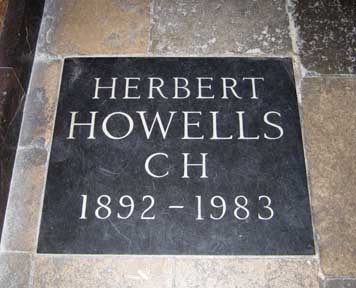
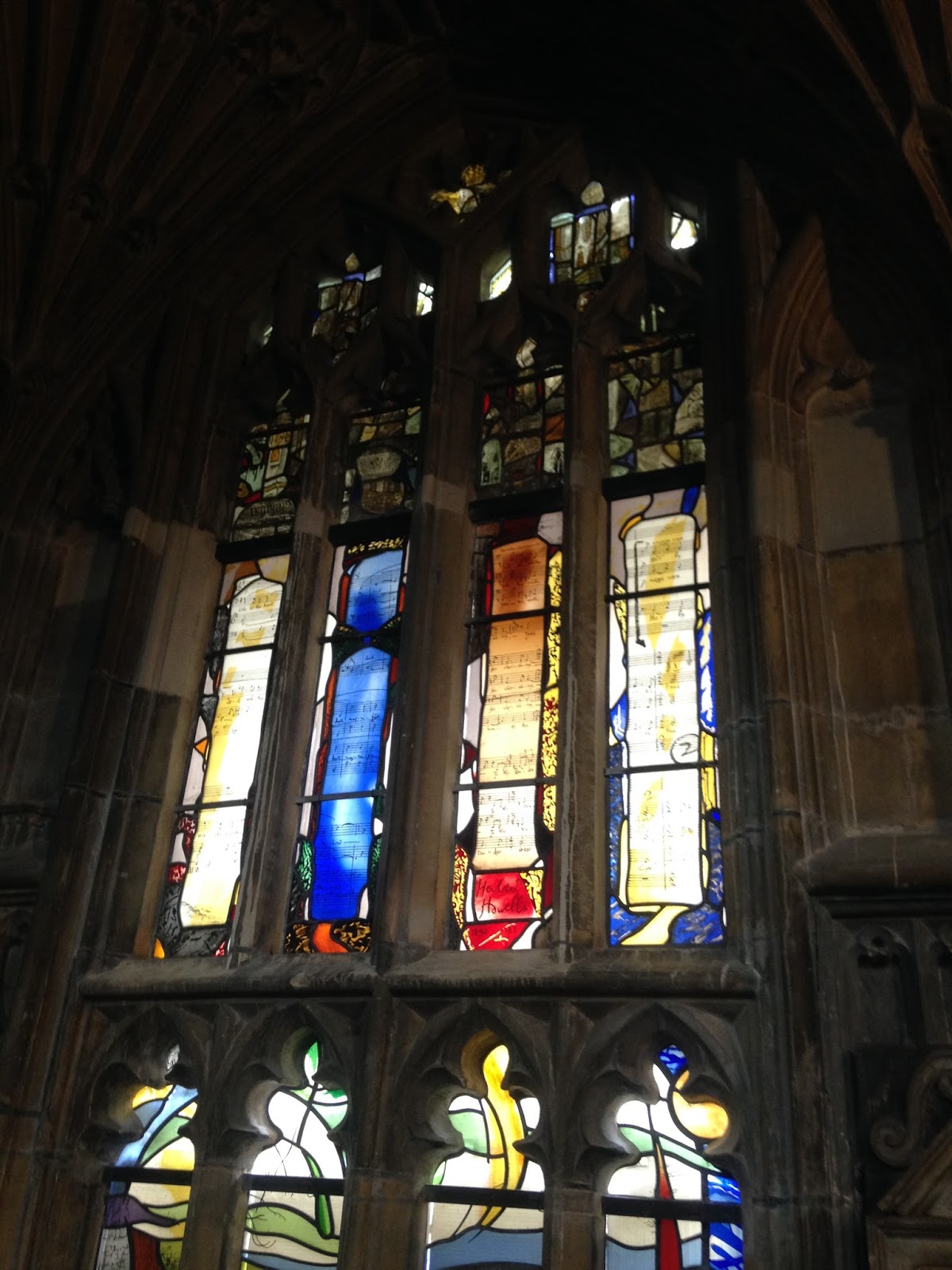
Westminster Lecture

Shaping the living and the dead.
The Annual Herbert Howells Lecture,

given at Westminster Abbey on 8th October 2016 by Dr Jonathan Clinch

is now available in the December volume of the 

Posted in Uncategorized | Leave a comment

Organ Recital: Merton College Oxford


Thursday 3rd November – 1:15pm

King’s Herald
Herbert Howells arr. Clinch
Passacaglia on the name joHn mcCABE 
Robert Saxton  
Pari intervallo 
Arvo Pärt
Sonata on the 94th Psalm 
Julius Reubke

Posted in Uncategorized | Leave a comment

Howells Cello Concerto Review

The Telegraph – 10th July 2016

Herbert Howells, Cheltenham Festival  – Four stars
All premieres are exciting, but to hear the long-delayed premiere of a piece by one of Britain’s best-loved composers is a particular thrill. Here was the Cello Concerto by Herbert Howells, beloved by parish choirs everywhere for his droopingly melancholic and very English church music.  

Howells began his Cello Concerto in 1933, but work was interrupted when his son died from polio in 1935. He never recovered from the blow, and working on this piece became a protracted act of mourning. Only the first two movements were completed, the second in piano score. As for the finale, a few dozen pages of sketches survived. These have been pieced together and fleshed out into a performing version by the English music scholar Jonathan Clinch.  
Last night the complete piece was performed at the Cheltenham Festival by Guy Johnston and the Royal College of Music Symphony Orchestra.  The venue was Gloucester Cathedral, whose rich associations with Howells and English music in general were cleverly revealed in the programme. The first piece we heard was Vaughan Williams’ much-loved Fantasia on a Theme of Thomas Tallis. Its rapturous string psalmodies, eased ever-so-gently into life by the RCM SO’s strings under Martin André, seemed to breathe from the very stones and arches of the cathedral, as if they remembered the world premiere of the piece given here back in 1910.  
That premiere was witnessed by Herbert Howells, and sitting alongside him was Ivor Gurney, another quintessentially English composer. His two First World War songs By a Bierside and In Flanders were sung here with touching fervour by Nicholas Morton. Then came Britten’s Sea Interludes from Peter Grimes, premiered at the first ever Cheltenham Festival in 1945.  
After the fury of that piece, Howells’s long-awaited concerto held out the promise of something more elegiac and pastoral. In fact it was nothing of the kind. True, the piece began with a lyrical descending phrase, beautifully shaped by soloist Guy Johnston, which had the feeling of a benediction. But this was soon offset by a contrasting idea involving expressionist muted trumpets, and the tension between these two generated a huge energy. Whenever the music tried to be consoling it was invaded by panic and anger, and a sense of desperate searching that led the argument to unexpected places (including a surprising touch of blues in the slow movement). We should be given another chance to hear this remarkable, troubling piece, and soon.  
The Cheltenham Festival continues until 17 July 01242 511211
END
Posted in Uncategorized | Leave a comment

A moment of Howells history

How the English composer’s Cello Concerto is set to be performed for the first time ever in concert

An interview with Jonathan for BBC Music Magazine has been published at http://www.classical-music.com/article/moment-howells-history

Tickets for the premiere at The Cheltenham Festival are available here

Posted in Cello Concerto, Herbert Howells | Leave a comment

Herbert Howells Premiere in Gloucester


Martin André – conductor
VAUGHAN WILLIAMS – Fantasia on a Theme by Thomas Tallis
IVOR GURNEY – 2 Songs: “By a Bierside” and “In Flanders” (Nicholas Morton)
BRITTEN – 4 Sea Interludes
HOWELLS – Cello Concerto (soloist Guy Johnston – World Premiere)
Further details of the Cello Concerto project are available here.

Pre-Concert Talk by Dr Jonathan Clinch at 5pm

Posted in Uncategorized | Leave a comment

The Organ Works of Sir George Dyson – Some thoughts


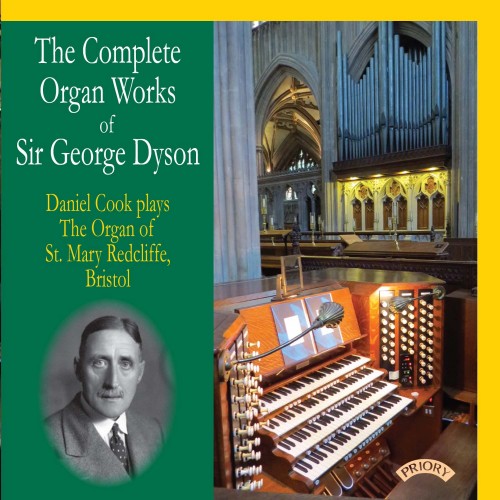
Daniel Cook (Westminster Abbey) has just recorded Dyson’s Complete Organ Music for Priory (available here). Here are my notes for the recording…

Sir George Dyson (1883 – 1964) was one of the foremost British composers and educators in the first half of the twentieth century; starting from the lowliest of working-class roots, he became a key figure in the musical life of the nation. The son of a blacksmith, he was born in the industrial town of Halifax in the West Riding of Yorkshire; “Coal pits, quarries and ‘dark Satanic mills’ alternated with hill-side pasture and remote farms”. His first musical experiences where at the local Baptist church and he took organ lessons from an early age, making remarkable progress and passing his Fellowship Diploma from the Royal College of Organists at the age of 16. Composition too started around this time and included a Sonata for Organ (now lost), featuring a movement entitled ‘Variations on St Ann’s Tune’.
In 1900 Dyson gained an open scholarship to the Royal College of Music in London, studying composition with Sir Charles Stanford. Further success came with a Mendelssohn Scholarship in 1904, allowing additional study in Italy and Germany. With the help of Sir Hubert Parry, he gained the post of Director of Music at the Royal Naval College at Osborne on the Isle of Wight upon his return to England in 1907. Dyson’s teaching career flourished and in 1911 he was appointed to Marlborough College. This period was clearly notable as Paul Spicer’s 2014 biography of Dyson quotes the satirical magazine Punch: ‘Since he has been at Marlborough Mr Dyson has given a large number of much-appreciated recitals in the college chapel. The organ is still undergoing repair. We make no comment.’
At the outbreak of war, Dyson enlisted and put his teaching skills to good use writing a guide on hand grenades. At the end of the war he submitted for the Oxford DMus degree and subsequently began teaching at the Royal College of Music and Wellington College. With his early writings for the journal Music & Letters, Dyson became one of the leading commentators on contemporary music, publishing New Music (OUP 1924) and following it with the equally important The Progress of Music (OUP 1932). 1924 also saw Dyson’s appointment as Master of Music at Winchester College where his duties included substantial work with the chapel choir. Dyson’s profile continued to grow and in 1938 he was appointed Director of the Royal College of Music. Compositions during this period included the Sibelius-like Symphony in G (1937) and a remarkable Violin Concerto (1941). During the Second World War, he took the brave decision to keep the Royal College open, thus supporting its staff financially and setting a courageous example to the outside world. He was knighted in 1942. Dyson retired to Winchester in 1952 but he remained active as a composer and his appointment as President of The Royal College of Organists renewed his interest in the instrument.
The Fantasia and Ground Bass, Dyson’s most substantial organ work, was written in 1960, and demonstrates his skills at handling large forms. After a grand but agitated and melancholic Maestoso, Dyson introduces a much more incisive Allegro moderato whose syncopated pedal gives it real drive. The quieter contrasting sections introduce more of a modern idiom, the lyricism of which has much in common with Percy Whitlock’s fine organ music. The multiple sections and frequent build ups allow the performer to make full use of the range of colours available on a large romantic organ such as St Mary Redcliffe. The Ground Bass takes a pedal theme as the basis for a set of expressive variations, the harmonic basis of which is set early on and retained throughout. Again the constant changing of stops required makes the most of the romantic organ and builds to a climax of extraordinary volume.
The revolution in hymnody which occurred at the start of the twentieth century in Britain is demonstrated in the various hymn books (and new editions) that were published such as Hymns Ancient and Modern (1904) and The English Hymnal (1906/1933). Under editors such Ralph Vaughan Williams, out went many of the high-church Victorian tunes and in came a collection of either newly- written melodies, folksongs or resurrected tunes from earlier periods, particularly the 17th and 18thcenturies. In the world of English public schools, where hymn singing in the school chapel was seen as an important corporate activity, Songs of Praise (1925), The Clarendon Hymn Book (1936) and particularly The Public School Hymn Book (1903/1919) paved the way for an renewed interested in hymn singing. In the Variations on Old Psalm Tunes (1960/1), Dyson took a variety of late-sixteenth and early-seventeenth century melodies and used them as the basis for short voluntaries, to be played before (often quiet) and after (much louder) Anglican services. This was practical music, written for the abilities of the average organist, but Dyson also cared about providing quality pieces in the vein of Parry’s Chorale Preludes, Stanford’s Short Preludes & Postludes and more modern writing such as Percy Whitlock’s Seven Sketches on Verses from the Psalms or Ralph Vaughan Williams’ 3 Preludes Founded on Welsh Hymn Tunes. All of them have a distinctly British feel, thus for example, Thomas Campion’s modal tune to ‘By the waters of Babylon’ is treated to an English pastoral setting, more suggestive of an English riverbank than ancient Mesopotamia and the Scottish tune to ‘I was glad’ is treated to a jaunty Elgarian scherzo, which builds to a fortissimo climax, complete with tuba. Although entitled Variations, the pieces are really short miniatures during which Dyson was not afraid to let the tune itself take the central stage and thus they demonstrate a directness and clarity which was typical of the straight-talking Yorkshireman.
The gentle Prelude (1956) takes the form of a lyrical ternary intermezzo (or song without words) and was a commission for Novello’s Organ Music Club. Written just after the famous Magnificat in F, there is a notable similarity here with the texture of solo tune, syncopated accompaniment and 8ft pedal. The functionally-named Voluntary in D (1958) was written for a collection entitled ‘An Album of Praise’ (published by Oxford University Press) and develops an energetic fanfare motif heard at the outset through to a loud climax in a quasi-chorale. The Postlude (1956) was published as a companion piece to the Prelude and takes the form of a brisk minuet in ternary form, contrasting the full choruses and, in final section, using both the enormous Solo Tuba and 32ft Double Ophicleide of the Pedal division. Taken as a whole, Dyson’s organ works are about accessibility and emotional directness; confident and full-bodied they reflect the spirit of the age as much as this organ itself does – Arthur Harrison’s 1912 masterpiece, an instrument of unique beauty and power.
 Copyright 2015 – Jonathan Clinch

Posted in Uncategorized | Leave a comment

Saxton, Howells & Bach – at Queen’s College Oxford

Wednesday 14thOctober 2015 – 1:10pm
Dr Jonathan Clinch
Birmingham University
Programme
Canzona (BWV 588) – J. S. Bach (1685-1750)

from the third part of the Clavier Übung:                                             
Kyrie, Gott Vater in Ewigkeit (BWV 672)                
Christe, aller Welt Trost (BWV 673)
Kyrie, Gott heiliger Geist (BWV 674)
Chorale Prelude ‘Wo Gott zum Haus nicht gibt sein Gunst’ – Robert Saxton (1953-)
Partita for Organ – Herbert Howells (1892-1983)
i.                     Intrata
ii.                   Interlude
iii.                  Scherzo and Epilogue
iv.                 Sarabande for the 12th day of any October*
v.                   Finale and Retrospect
 (*the birthday of Ralph Vaughan Williams)
Posted in Uncategorized | Leave a comment

Howells Concerto Reviewed

The Gramophone have reviewed the recent recording of Herbert Howells’ Cello Concerto: Read it here. For full details of the project – select the Cello Concerto tab above.

Posted in Uncategorized | Leave a comment

Guest Blog: The Gramophone

The Gramophone have just published my blog on completing Herbert Howells’ Cello Concerto. 
The recording itself is available on Amazon.
Posted in Uncategorized | Leave a comment

Herbert Howells Cello Concerto – Fantasia, Threnody & Finale

I’m very pleased to announce that the first recording of Herbert Howells’ Cello Concerto, a work which I completed from the composer’s sketches as part of my PhD study, is now available for pre-order from Dutton Records.
Herbert Howells: Cello Concerto
Howells: Two Orchestral Pieces
Ronald Corp: Cello Concerto
Alice Neary (cello)
Royal Scottish National Orchestra
Ronald Corp (conductor)


For those interested, I’ve reproduced my notes on the Howells works below.
__________________________________
Fantasia: Tranquillo, assai Andante
Threnody: Lento calmato, assai teneramente
Finale: Allegro vigoroso
Herbert Howells (1892 -1983) was the perfect English gentleman; small in stature, softly spoken and always immaculately dressed. His lifelong association with The Royal College of Music, alongside doctorates from both Oxford and Cambridge and several honours, mark him out as the inheritor of Stanford and Parry’s ‘English Musical Renaissance’.  However, a difficult childhood and a propensity for self doubt made him an extremely private man, an outward refinement guarding a restless heart. The Cello Concerto, although never finished in his lifetime, gives us a unique window into the composer’s emotional world.
Howells began sketches for a cello concerto in 1933, which he continued intermittently thereafter. In September 1935 tragedy struck the Howells family whilst they were on holiday in Gloucestershire. Nine-year-old Michael, their second child, became ill and within the space of a few days died from polio. In the immediate aftermath, Howells turned to composition as a means of dealing with his grief, focusing on two works, the Cello Concerto and Hymnus Paradisi (reworking material from his earlier Requiem). Both became private ‘medical documents’. In 1950 a group of friends (including Herbert Sumsion and Ralph Vaughan Williams) convinced Howells to release Hymnus Paradisi for its first performance at The Three Choirs Festival in Gloucester, a few miles from where Michael was buried. Both works are of major importance within Howells’ output, but what is special about the concerto is the direct focus on the individual which the concerto form brings. Howells saw the cello as ‘an extension of the male voice’ and in this highly personal work, that voice is markedly his own.
He completed the first movement and included it within his DMus submission at The Queen’s College, Oxford, in 1937. For examination purposes he gave the movement the title ‘Fantasia’ and it was subsequently deposited in the Bodleian Library. Although it came from the examination rubric, the title ‘Fantasia’ is particularly suitable since Howells often cited the premiere of Vaughan Williams’ Fantasia on a Theme by Thomas Tallis as his most important formative experience, frequently adding that ‘all through my life I’ve had this strange feeling that I belonged somehow to the Tudor period not only musically but in every way’. Howells’ fascination with this period and his subsequent involvement with the Tudor Church Music series at the start of his career had a very direct influence on his own composition. In 1926 Howells started to experiment with Tudor compositional techniques in his collection Lambert’s Clavichord and this influence continued throughout his life to varying degrees. In the Fantasia, Howells’ love of modal harmony and, in particular, the colour of his chromatic alterations and false relations come to the fore in the frequent juxtaposition of major and minor triads (most notably at the end of the movement). Also of note, is the way in which he wrote in long lines (as though his mode of thinking was principally horizontal) and this is partly why the first movement is relatively long in length and rhapsodic in form, as Howells expands elements from the initial cello entry. Despite such economy of musical material, Howells achieves a remarkable overall sense of pathos through his subtle development of texture, line and harmonic colour.
The second movement was completed in short score in the summer of 1936, but Howells made no attempt at a full score, continuing instead with sketches for the final movement. Evidence from letters and diary entries suggests that he returned to the sketches for the concerto as a sort of mourning ritual, each year around the anniversary of his son’s death. At various stages friends tried to get him to finish the work, but he felt unable, possibly because of the highly personal nature of this particular work. In 1992, Christopher Palmer unearthed the second movement from the Howells estate and orchestrated it to match the preceding movement. It was then performed in a centenary concert in Westminster Abbey, where Howells’ ashes had been buried. Following Palmer’s untimely death in 1995, the concerto sketches were returned to the Royal College of Music library.
In 2010 I began to study the sketches and was particularly struck by the quantity of material (thirty-four pages in total) and the contrast it provides to the other two movements. The chance to hear what the finished concerto might have sounded like as a whole seemed an extremely interesting ‘what if’ and after a few months of working on the sketches I realised that the page numbering (that had been subsequently added) was incorrect, which allowed me to reorder them, giving twenty-four pages of continuous music in short score (often just outlined). The other ten pages demonstrated Howells’ ‘working’, including the reworking of several ideas from the initial twenty-four pages.  From this I created a single edition of the material, incorporating his later changes and adding an ending based on the earlier material in a manner which matches Howells’ form in several other works. I also ‘filled out’ the bars in the earlier sketches where he left only a single part (without harmony) in order to indicate his intensions. Finally I orchestrated the movement to match the forces of the preceding two, particularly noting Howells’ own orchestration of similar material in the Fantasia. I am particularly grateful for the advice and support of John Rutter, Robert Saxton, Anthony Payne, Christopher Robinson, Julian Lloyd Webber (Howells’ godson) and Jeremy Dibble.
It was typical of Howells that the piece should only ever see the light of day as an examination exercise (such was his disinterest in self promotion) and it seems fitting that the concerto be finished as a similar doctoral exercise. As one of the ‘medical documents’ that he used to come to terms with his son’s death, it is an extremely special work in which you can hear the emotional backdrop in the music itself. Such turmoil unlocked a new stage in his compositional career, giving Howells a new reason to write and an active release from the critical self doubt that had plagued him in the decade following the second piano concerto. The chief influence is that of Vaughan Williams (especially in the allusion of the opening to ‘The Lark Ascending’) with their shared love of modal harmony, soft diatonic dissonances (with frequent sevenths and ninths) and false relations, but Howells’ own love of writing in long lines, which rework a small number of short motivic ideas, allows the distinctive syntax to stand out in his inimitable way, far beyond mere pastiche. Howells considered the second movement as possibly his finest work and the finale in particular shows a very different side to the composer we know from his Anglican Church music. The finale is much more angular and energetic, so one might assume a focus on the anger and pain caused by his loss, but then the remarkable jaunty subject in 7/8 enters (a theme which would seem much more likely in Holst’s music) and suddenly there is a child-like sense of fun. Overall, the restless tension and richness of aesthetic seem to match Howells the man so well, transforming the concerto into a soliloquy on grief and the associated mixed emotions, which we, through music, are privileged to share.
Two Pieces for Small Orchestra, op.20
i) Puck’s Minuet  ii) Merry-Eye
The London performances of Diaghilev’s Ballets Russes acted as a major influence on a generation of young composers which included the likes of Arthur Bliss, Eugene Goossens, Arthur Benjamin and Howells himself. For the first time they were exposed to the rich and exotic orchestral music of composers such as Debussy, Ravel and Satie. Of all the scores though, it was Stravinsky’s tale of a puppet coming to life, Petrushka, which captured Howells’ imagination the most and inspired his first ‘light’ music. He started in 1914 with a suite for orchestra entitled ‘The B’s’, each movement of which he titled with the nicknames of his fellow students at the Royal College of Music; the suite was programmed as one of the ‘symphonic interludes’ in the 1919 Ballets Russes season in London. For the ‘Two Pieces for Small Orchestra’, ‘Puck’s Minuet’ and ‘Merry-Eye’, Howells returned to the same idiom he had developed initially in ‘The B’s’. Both are pastoral works in the sense that they incorporate elements of country life (including dance and quasi-folk tunes), Howells no doubt had scenes from his native Gloucestershire in mind as he transformed Stravinsky’s Shrovetide Fair into a quintessentially English country fete (complete with orchestral piano). Reminiscent of Debussy’s own ‘La danse de Puck’ from book one of Préludes, ‘Puck’s Minuet’ is a light scherzo, of which Howells wrote: ‘though written to an imaginary scene, it little matters what particular ‘picture’ is in the listener’s mind, so long as there be a picture’. Remarkably, Howells sketched the whole work in the waiting room at Reading Station during a three-hour delay. The piece became popular for a short time and was a particular favourite of the conductor Sir Hamilton Harty. Following Puck’s success, Howells wrote a more extended work on a similar fairytale idea, ‘Merry-Eye’, to a commission from Sir Henry Wood for the 1920 Proms, about which he wrote:
This piece has not necessarily a programme, but if an idea of such be entertained, it can be supposed that the listener meets with an average-type character out of the domain of folklore – called Merry-Eye – who reveals more about himself and his personality than folklore itself ever tells of him or his kind. Much that he relates is true to his name and to such part of his history as is common reading-public property; much else, on the other hand, contradicts this. Merry-Eye’s name is – like most titles – only half suggestive of youth.
Again, like ‘Puck’s Minuet’, the score was written at speed, this time during his honeymoon at Soudley in the Forest of Dean. It was also similarly well received, with one critic noting: [Howells] ‘has produced a score which for skill and beauty of colour could hold its own beside anything by Debussy or Stravinsky’.

Posted in Uncategorized | 1 Comment